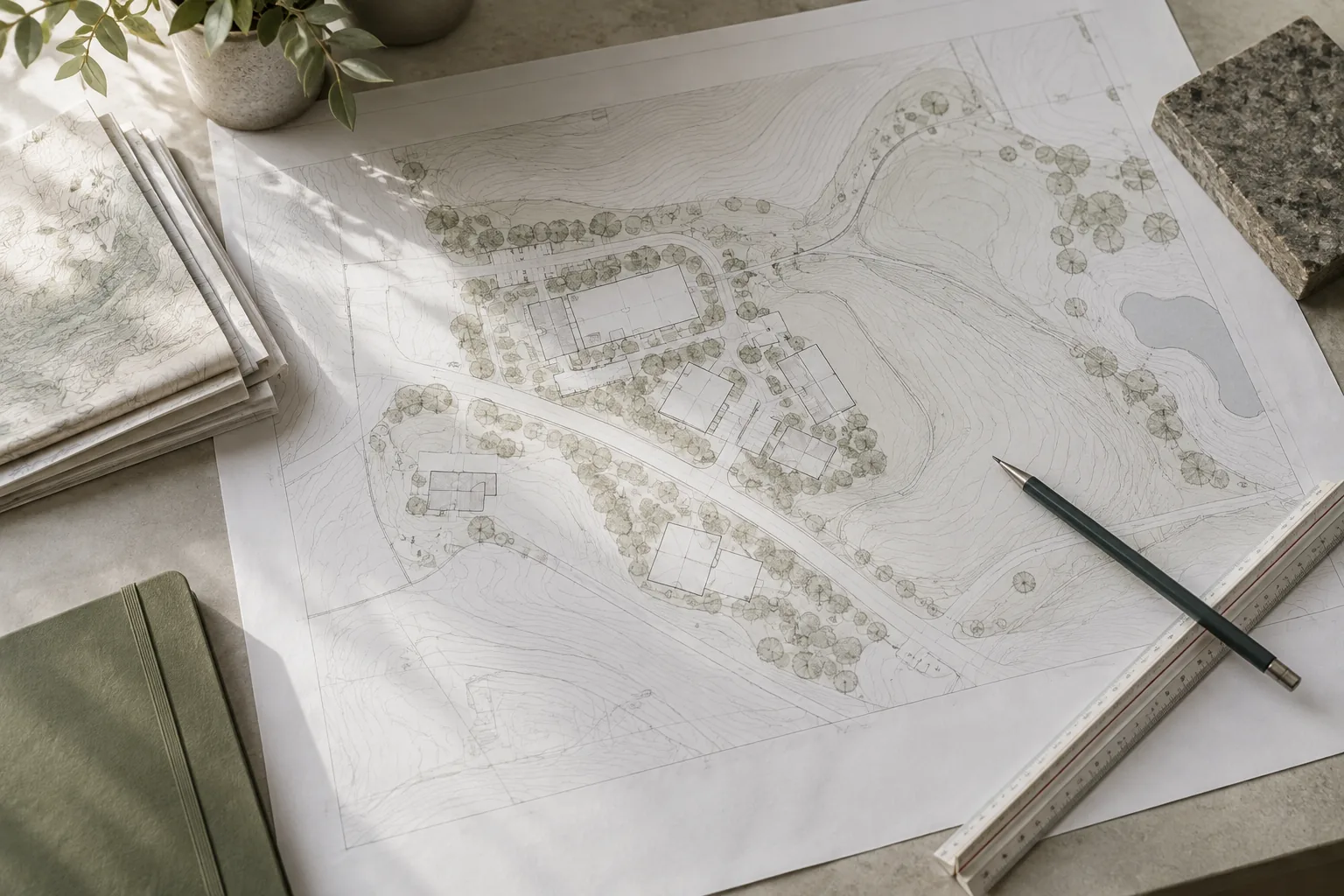
Why the road begins before the asphalt
Site conditions, earthworks, drainage, structures, and utilities shape the corridor long before the surface is laid.
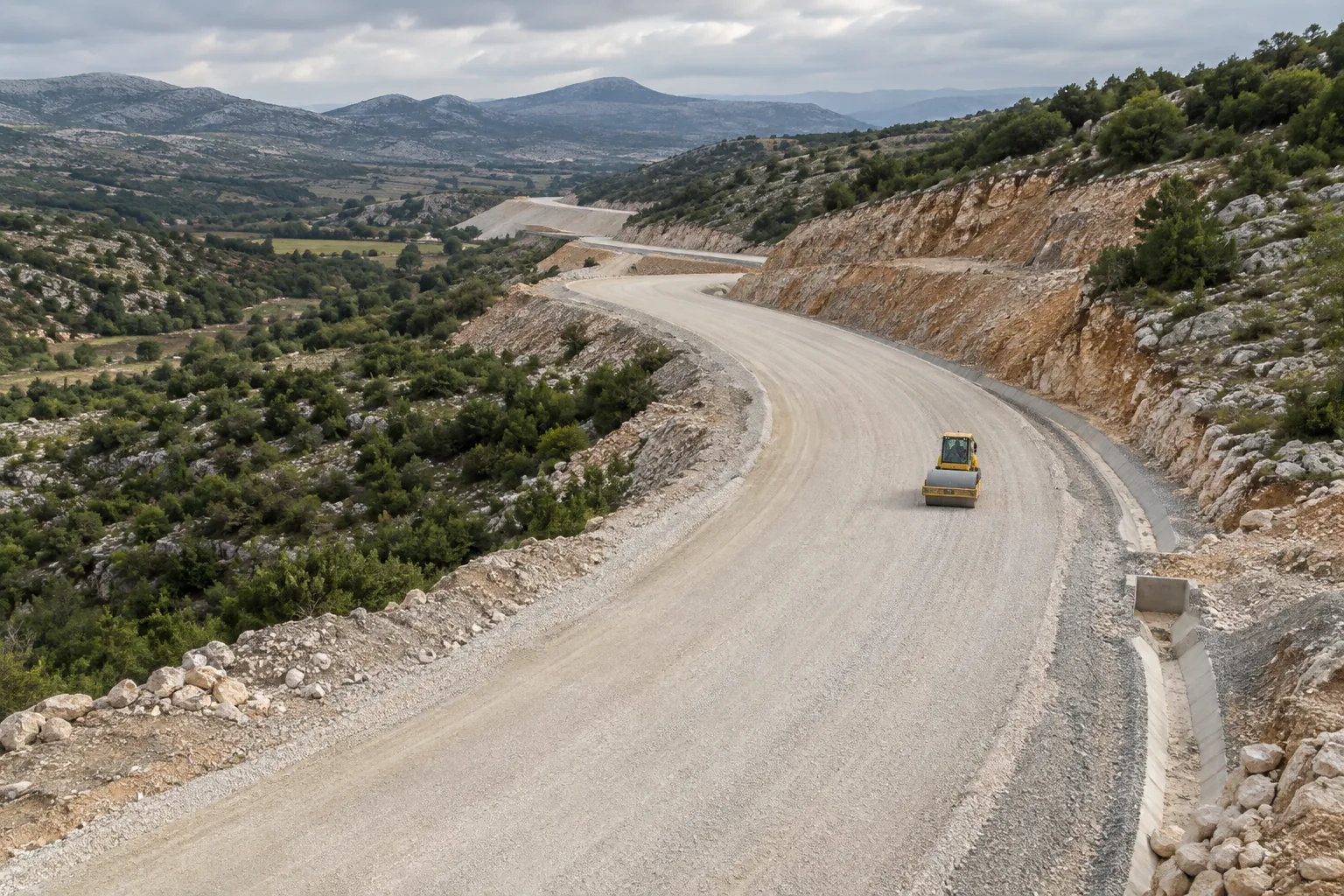
The finished surface is the part of a road most people notice. Yet the decisions that make a corridor buildable begin much earlier: with the ground, the movement of water, the surrounding connections, and the way construction will reach the site. Understanding those relationships gives a project a clearer starting point.
Read the site before defining the route
A line on a plan has to become a route through an existing place. Changes in level, neighbouring properties, access points and existing services all belong in the early discussion. A site walk and available survey information help establish what is known. They also reveal which assumptions need investigation before the design or construction scope can be settled.
Look beneath the finished surface
A pavement is a system of layers supported by the ground beneath it. The condition of that ground and the materials above it matter together. Earthworks, preparation and verification therefore deserve attention in their own right. The appropriate investigations, materials and acceptance criteria must be defined for the particular site, rather than inferred from how a neighbouring road was built.
Give water a place in the plan
Drainage is part of the road system, not a finishing detail. The project needs to consider where water comes from, how it moves through the corridor and where it can be discharged appropriately. Existing channels, crossings and downstream conditions belong in that assessment. Drainage and road levels need to be considered together, with arrangements for inspection and maintenance after completion.
Plan the connections and the sequence
A corridor may meet utility crossings, structures, side roads and entrances that still need to function during the works. These connections affect both the finished design and the construction sequence. Identifying responsibilities and required decisions early helps the team understand what must be coordinated before the next activity begins. The useful question is not only what will be built, but what must be resolved first.
Questions to take into the next conversation
- Which site conditions are confirmed, and which still need investigation?
- How do drainage, utilities and access affect the proposed works?
- What needs to be agreed before the next construction stage?
Further reading
FHWA — Geotechnical Aspects of Pavements